
Around the world, the food processing industry remains robust, driven by the growing global population and increasingly strict requirements for both maintaining food quality and avoiding food contaminants. Visible light cameras have played an important role in agricultural food product sorting and inspection systems for a long time. Recently, the shortwave infrared (SWIR) technology has emerged as a powerful imaging tool, offering higher resolution and picking out features that are not immediately obvious in visible light.
What Is The SWIR Spectrum
The SWIR part of the spectrum is generally considered to be wavelengths between 900 and 2500 nm. Unlike LWIR or MWIR detectors, which detect emitted thermal radiation, SWIR detectors primarily capture reflected light, making their imaging properties comparable to visible cameras but in the invisible part of the spectrum. InGaAs based SWIR detectors demonstrate exceptional sensitivity in the SWIR band from 900 to 1700 nm particularly, capturing critical information within this range. It’s excellent at sorting agricultural food products and detecting foreign matters, such as packaging, mixed in with the food. Learn more about the applications of SWIR.

Key Considerations for Adopting SWIR Imaging
In deciding whether to adopt SWIR imaging for your sorting machine, it is crucial to know whether there is some ingredient of the objects being viewed that stands out at SWIR wavelengths. Knowing the SWIR wavelength you need is often critical. Moisture is a key indicator of process control and quality in the agriculture food product industry. For food sorting based on moisture content, the typical wavelength is 1450 nm, with a strong absorption by water. Different food sorting machines might require different wavelengths. SWIR detectors can identify various aspects of food, such as a bruise in an apple, the sugar content in an apple or the fat content in meat, which show distinct differences in spectral features from the area around them.
A typical sorting machine consists of 4 parts, which are a feed system, inspection system, signal processing system, and separation system. Objects fall from a shaker past a light source and a SWIR camera, which quickly identify the defective product or foreign matters that are then blown into the rejection pile by an air jet.

A Better Choice of SWIR Imaging for Food Product Sorting
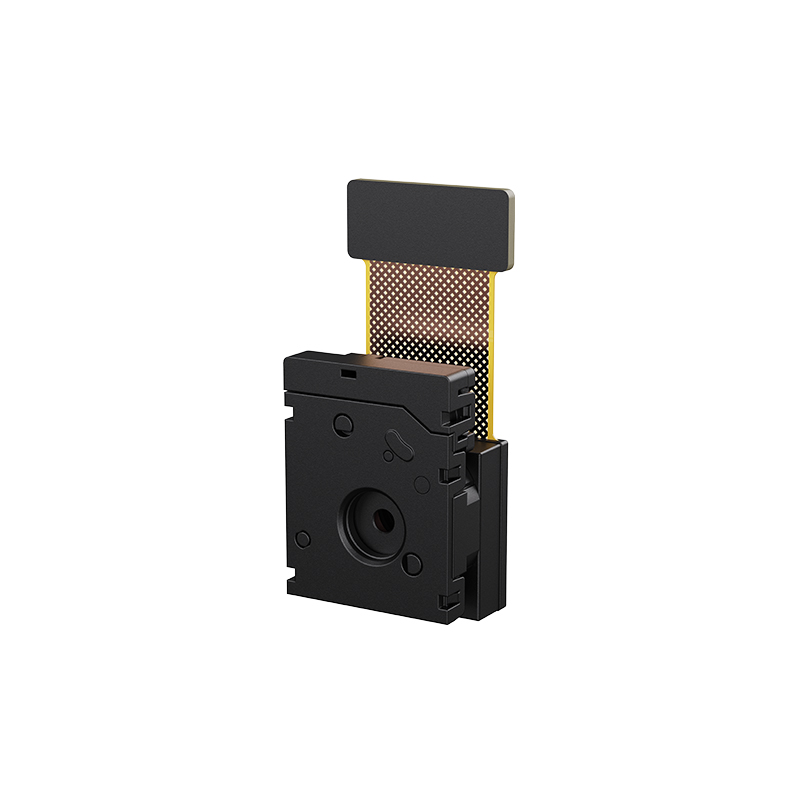
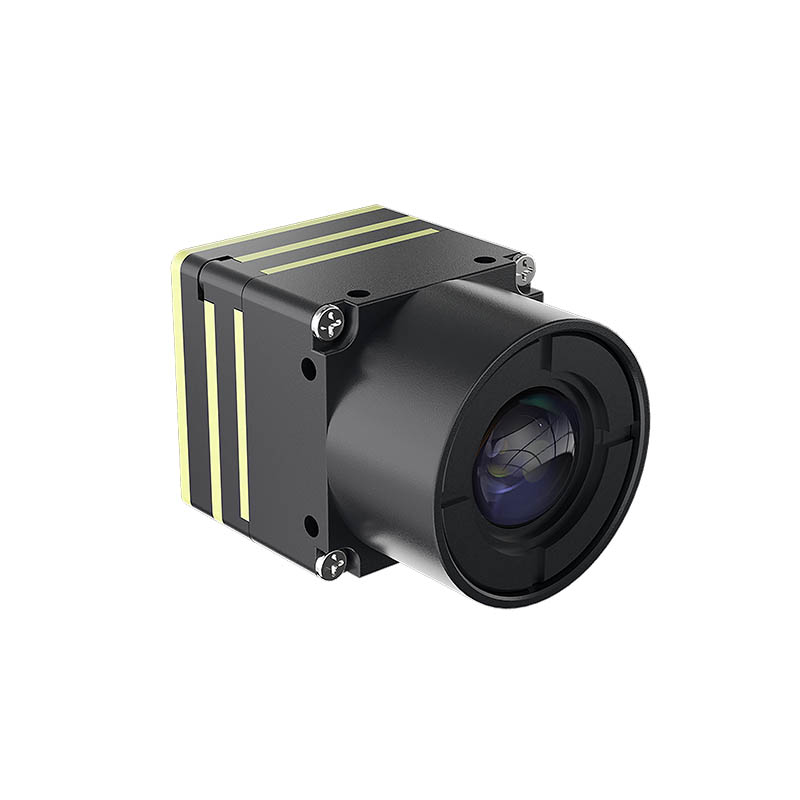
Raytron Microelectronics INS-101L line-scan SWIR camera is based on the high-resolution uncooled InGaAs detector with 12.5μm pixel pitch in a 1024×1 array. It features low noise, high line rate and low power consumption, supporting Cameralink or GigE image interface, moreover, friendly SDKs for secondary development are available. With built-in image correction and advanced imaging processing algorithms, this SWIR camera can be widely used in agricultural product sorting, waste recycling, Industrial sorting, photovoltaic inspection, machine vision, etc.
RECOMMENDED PRODUCT

INS-101L
1024×1 Linescan Camera
From Raytron Microelectronics Technology Co., Ltd.
If you think SWIR Imaging can help your business, please feel free to contact us, we will have a professional engineer to discuss with you in depth.