
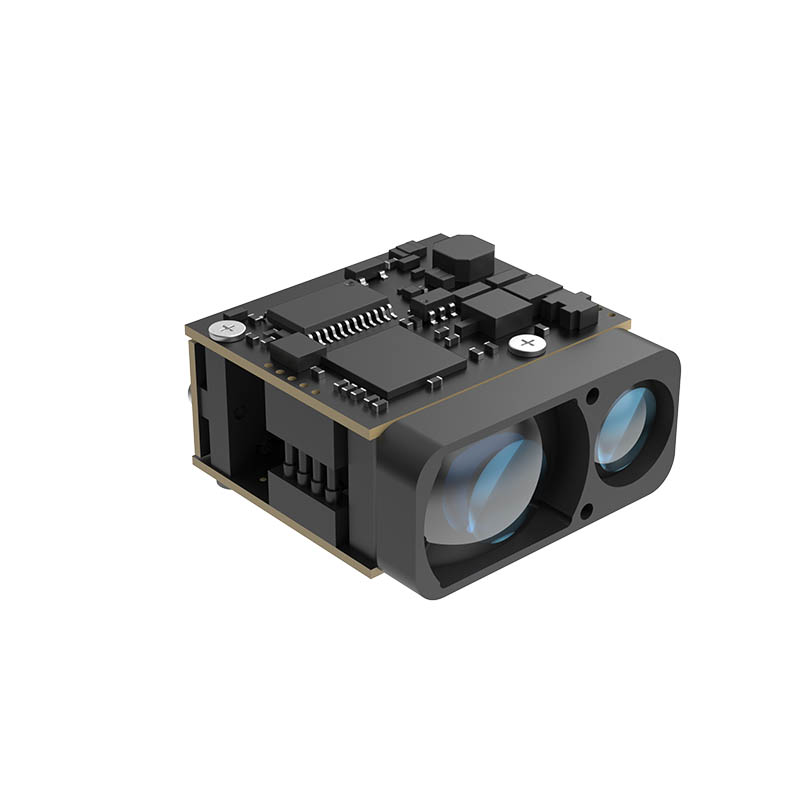
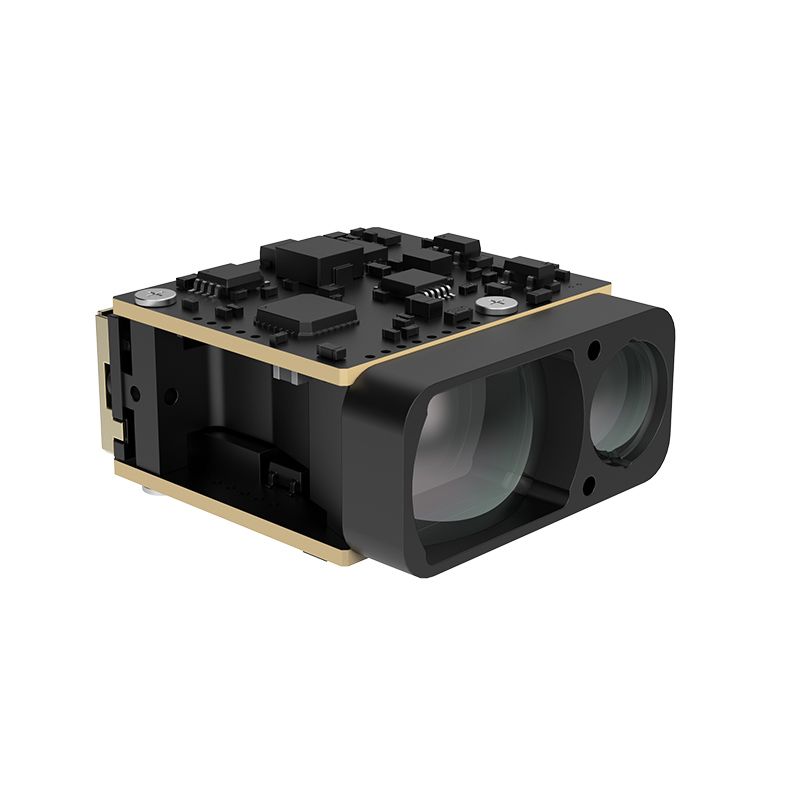
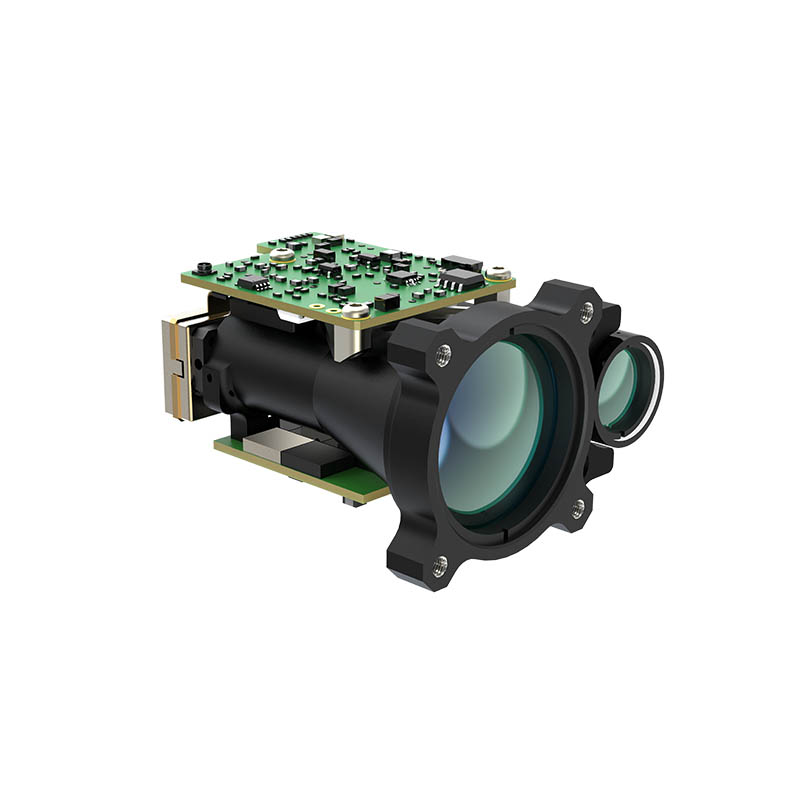
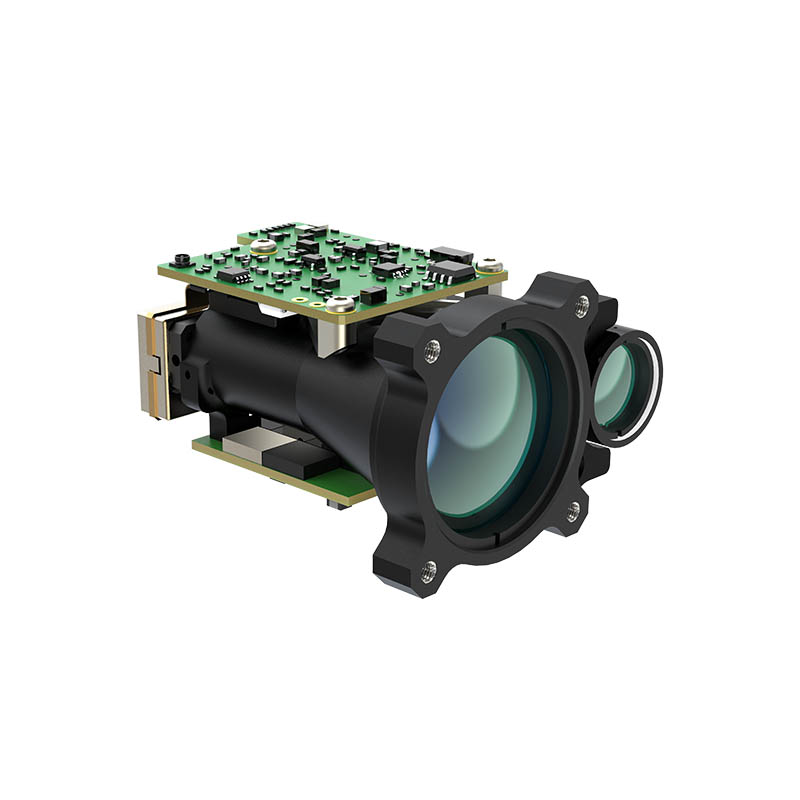
In the field of thermal drones, from power line inspection to search and rescue, thermal modules have long simplified operations. However, as mission requirements shift from close-range inspection to long-range monitoring and complex environment monitoring, the physical limitations of LWIR technology become increasingly evident. At this point, MWIR modules, exemplified by the Photon H615, meet these long-range demands effectively.
LWIR (8–14 μm)
Strongly absorbed by atmospheric water vapor
Practical detection range typically limited to 2–3 km under standard conditions
Longer wavelengths intensify diffraction, increasing optical design complexity
Achieving high image quality with focal lengths below 300 mm requires optimized optical layout and aperture

MWIR – Photon H615 (3.7–4.8 μm)
Operates in an atmospheric window with significantly lower attenuation
Provides enhanced long-range penetration capability
Equipped with a 20,000-hour long-life cooler
Capable of detecting targets such as vessels, vehicles and forest fire hotspots at tens of kilometers under favorable conditions
Why Long-Range Drone Monitoring Requires MWIR?
Important areas monitoring: A Security Barrier Across Long Distances
In expansive nature reserves and critical infrastructure zones, long-range monitoring provides early warning over a wider area.
LWIR: The effective monitoring radius of long-wave infrared thermal modules is typically within 3km. To cover large areas, drones must frequently take off and land or fly at low altitudes, which not only increases operational difficulty but also easily disturbs wildlife within the reserve.
Photon H615 Advantages: Leveraging the strong atmospheric penetration of mid-wave infrared, the Photon H615 can effectively identify heat sources at distances exceeding 10km. The drone can maintain stable flight below high-altitude clouds, covering an area several times larger than traditional equipment in a single takeoff and landing.
This allows thermal imaging drones to cover wide areas and provide long-range early warnings, enabling security teams to detect abnormal situations early and improve operational efficiency.
Maritime Search & Rescue
In maritime environments, LWIR suffers from high atmospheric absorption, whereas MWIR maintains clear, high-contrast thermal imaging even in humid and salt-spray conditions.
LWIR: High humidity over the sea causes severe absorption of long-wave infrared signals, often resulting in imagery that appears blurred or frosted.
MWIR wavelengths experience minimal attenuation in moist air. Whether locating a person overboard or tracking an unlit vessel engaged in illegal border crossing, Photon H615 maintains clear, high-contrast thermal imagery at long distances.
Key Advantages:
Expanded maritime search coverage
Faster victim localization during the golden rescue window
A force multiplier for coast guard and maritime SAR units
Wildfires monitoring

Forest fire prevention is not only about detecting open flames, but also about identifying smoldering and hidden heat sources.
LWIR: During wildfires, dense smoke severely obstructs visible-light imaging. At long distances, conventional LWIR thermal cameras struggle to resolve subtle temperature differences, making it easy to miss smoldering fire spots concealed within the fireground.
MWIR: With ultra-high thermal sensitivity (≤20 mK), the Photon H615 detects subtle temperature variations, penetrates light smoke, and accurately locates heat sources beneath dense vegetation or debris, helping prevent re-ignition.
Photon H615 enables command centers to build precise thermal fire situational maps. Long-range reconnaissance allows drones to operate outside hazardous high-temperature updraft zones, improving mission safety while protecting both equipment and operators.
Transitioning from LWIR to MWIR represents a leap from close-range inspection to comprehensive situational awareness. Weighing only 365 g, the Photon H615 brings cooled MWIR capability to commercial thermal drones, delivering long-range, high-resolution, all-weather thermal vision within reach.
About Raytron Microelectronics
Raytron Microelectronics, a wholly-owned subsidiary of Raytron Technology Co., Ltd., is a leader in uncooled infrared thermal imaging. With full-stack capabilities from IC and MEMS sensor design to system integration, we deliver high-performance infrared solutions for industrial monitoring, wildfire prevention, outdoor night vision, consumer electronics, and intelligent sensing. Guided by our mission, “To Create Incremental Value for Customers with Technological Advancements”, we continue to drive innovation and empower smarter, safer, and more efficient systems worldwide.For more on the Raytron Microelectronics program, visit:https://www.raytron-microelectronics.com/contact-us