
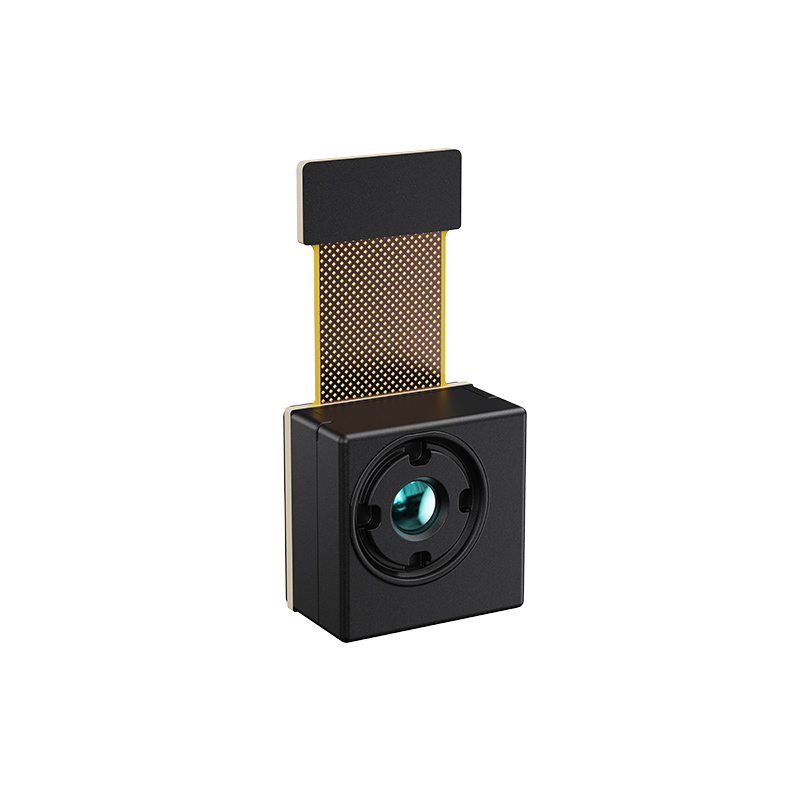
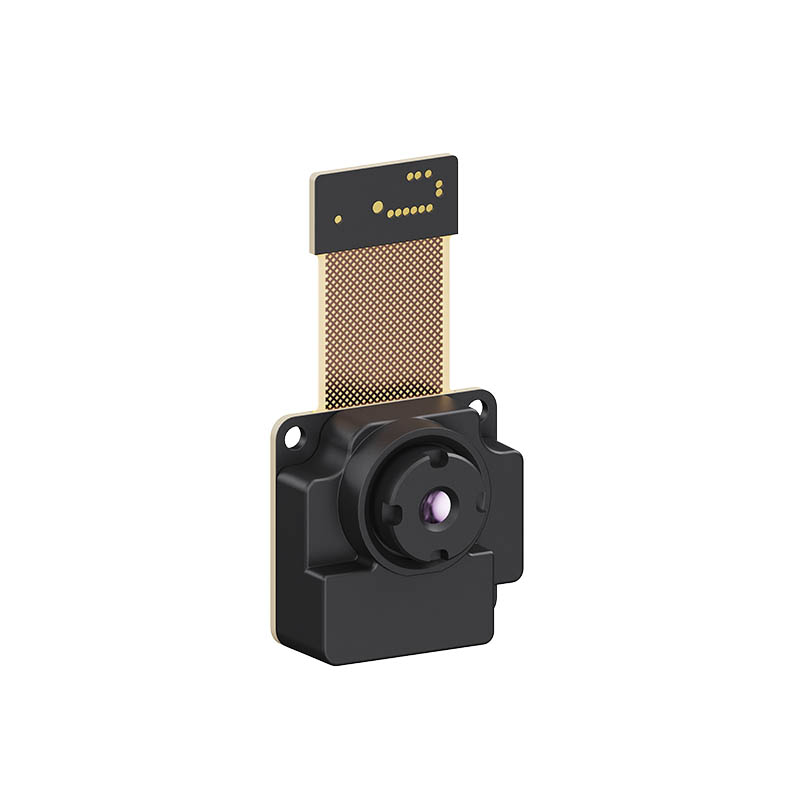
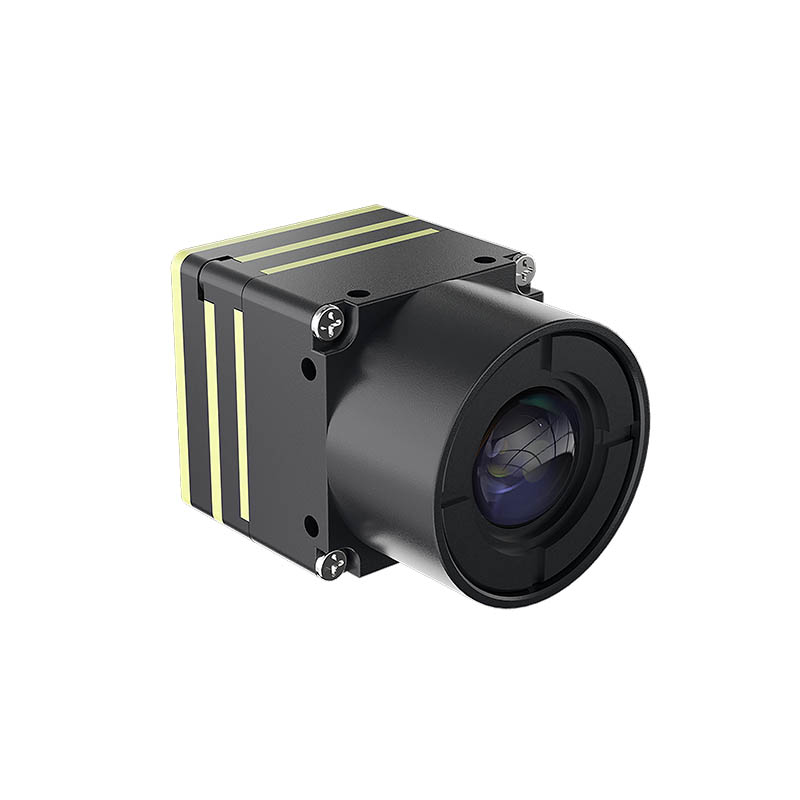
Pixel pitch is the distance between the centers of two pixels on an infrared detector. In thermal imaging, a smaller pixel pitch allows more pixels in the same sensor area, potentially enhancing spatial resolution and image detail. However, a smaller pixel size alone does not ensure a clearer image; performance also depends on factors like the lens and algorithms. If the lens’s modulation transfer function (MTF) is limited, increasing pixel density may not improve detail. Based on our company’s experience, 6μm and 8μm modules perform worse than 12μm modules. This is because smaller pixels typically have a lower fill factor, receiving less infrared energy. This reduces the photon collection per pixel, leading to a lower signal-to-noise ratio (SNR) and increased temporal noise, unless compensated by advanced readout circuits, microlens arrays, or pixel binning.

Why Pixel Pitch Matters in Infrared Thermal Imaging Quality
Pixel pitch is a crucial parameter affecting the spatial resolution of thermal imaging systems. It dictates the granularity of scene sampling within the field of view (FOV), influencing both target recognition and texture detail. Smaller pixel pitches enable a higher pixel density within a given sensor size, potentially enhancing image detail, assuming the optical system supports the increased sampling rate. Key metrics such as instantaneous field of view (IFOV = pixel pitch ÷ focal length) and MTF must align with pixel pitch to fully capitalize on this advantage. It is important to recognize that pixel pitch does not directly determine FOV; rather, FOV is defined by sensor size and lens focal length. Since sensor width equals pixel pitch multiplied by the number of horizontal pixels, pixel pitch indirectly impacts FOV by affecting sensor dimensions. For a constant pixel count, decreasing pixel pitch reduces sensor size and narrows the FOV, unless the optics are adjusted. This relationship is expressed by: FOV = 2 × arctangent[(sensor width ÷ 2) ÷ focal length]. In summary, pixel pitch is central to the sampling of thermal scenes, but to fully realize its benefits, careful consideration of optical design and system alignment is essential.
Is Pixel Pitch the Only Factor That Affects Infrared Thermal Imaging Quality?
While pixel pitch is a foundational parameter for spatial resolution, it is not the sole determinant of thermal image quality. Other factors—such as lens MTF, aperture size, sensor resolution, thermal sensitivity (NETD), and image processing algorithms—also significantly influence performance. Importantly, spatial resolution (linked to pixel pitch and array size) and thermal resolution (NETD) are two independent dimensions. A smaller pixel does not inherently mean better thermal sensitivity, and vice versa.
In actual use cases, even sensors with low NETD may fail to produce clear images if paired with poor optics or inadequate resolution. Likewise, sensors with high pixel density may not perform well if the lens or image processing fails to support the detail level. System-level optimization is therefore essential, and each component—from optics to algorithm—should be designed to complement the others.
How to Choose the Best Pixel Pitch for Your Application?
The optimal pixel pitch depends on the specific application scenario, detection range, and detail requirements. For short-range or detail-critical use cases—such as PCB inspection, handheld tools, or industrial diagnostics—smaller pixels like 6μm or 8μm may theoretically provide finer resolution. However, based on actual field performance, these smaller pixel pitches often underperform in image clarity if not supported by high-quality optics and sufficient infrared signal levels. In contrast, 12μm pixels, with their larger size, offer better photon collection per pixel, resulting in higher signal-to-noise ratio (SNR) and improved image clarity under typical operating conditions. This makes 12μm pixel pitch modules more reliable and effective in delivering clearer images across many practical applications.
For long-range or low-contrast applications—such as monitoring, power line inspection or firefighting—larger pixel pitches (e.g., 10μm or 12µm) offer greater photon collection per pixel, resulting in higher SNR and improved NETD. Our in-house comparison consistently shows that 12μm pixel pitch modules outperform 6μm or 8μm modules in real-world imaging, especially when working under challenging lighting or temperature conditions.

Ultimately, selecting the right pixel pitch involves balancing spatial resolution, thermal sensitivity, optical quality, and cost. The final decision should be based on imaging range, application context, and the level of detail required—bearing in mind that pixel pitch alone cannot determine image quality.
About Raytron Microelectronics
Raytron Microelectronics, a wholly-owned subsidiary of Raytron Technology Co., Ltd., is a leader in uncooled infrared thermal imaging. With full-stack capabilities from IC and MEMS sensor design to system integration, we deliver high-performance infrared solutions for industrial monitoring, wildfire prevention, outdoor night vision, consumer electronics, and intelligent sensing. Guided by our mission, “To Create Incremental Value for Customers with Technological Advancements”, we continue to drive innovation and empower smarter, safer, and more efficient systems worldwide.For more on the Raytron Microelectronics program, visit:https://www.raytron-microelectronics.com/contact-us