
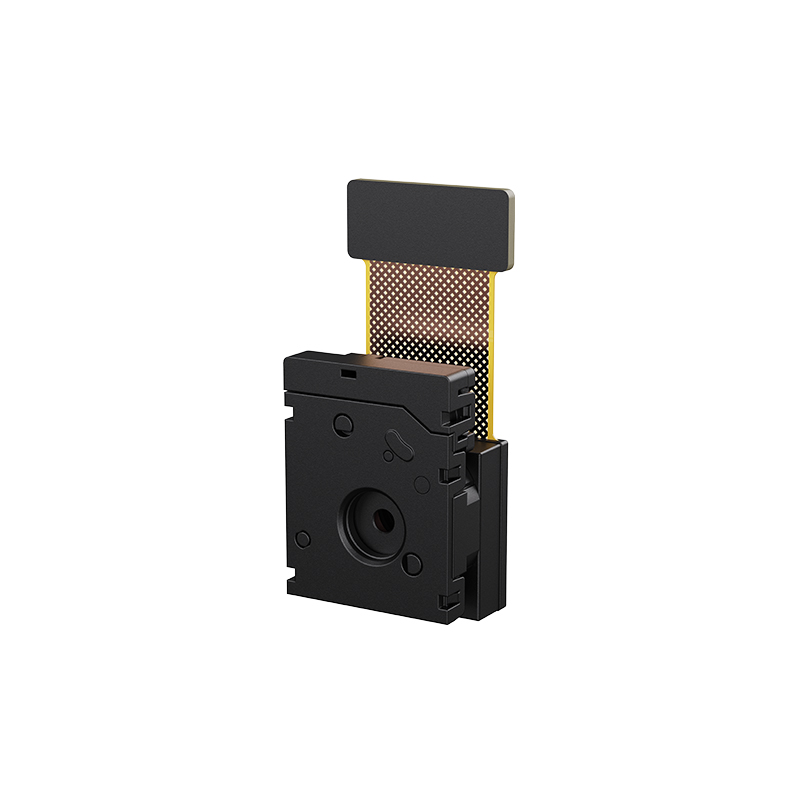
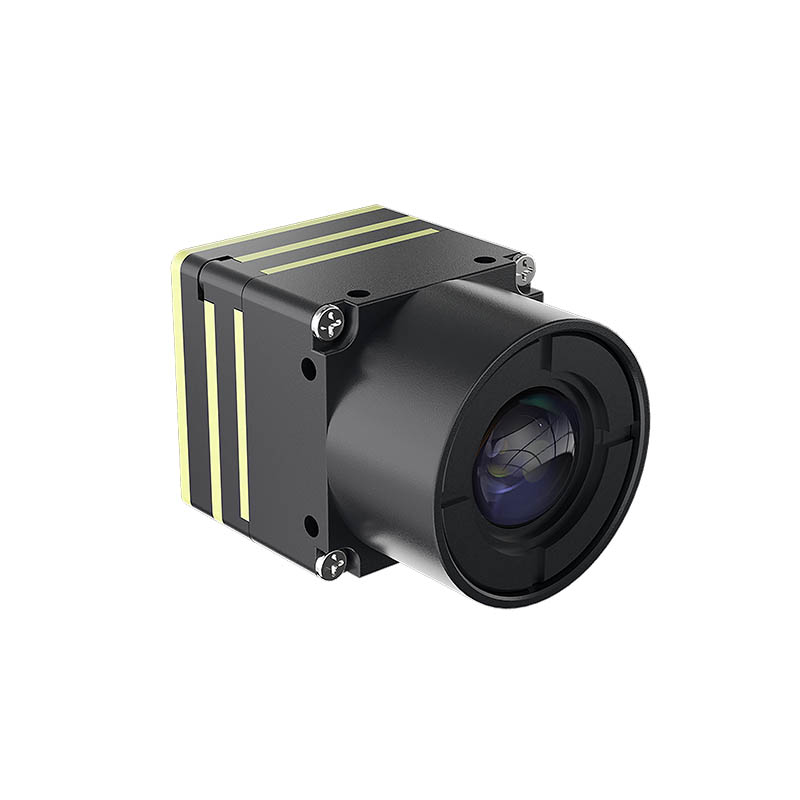
Industrial system integrators face mounting pressure to keep automation reliable as facilities expand and workflows accelerate. They need thermal modules that stay consistent regardless of lighting or operational turbulence.
Thermal modules deliver this stability by detecting heat signatures directly. They provide clear, uniform imaging even when visible-light cameras fluctuate, giving SI teams a dependable foundation for machine vision, robotics, and automated inspection.

The 4 Key Advantages of SI Teams Stem from Thermal Modules
SE5 thermal modules do not lie solely in their technical specifications. Their true advantage is integration efficiency—shorter development cycles, lower project costs, and higher deployment success rates.
- Higher resolution enhances image detail within the same FOV
A 1280×1024 SE5 thermal module improves the thermal detail within the same field of view (FOV), enabling finer thermal segmentation. The FOV itself is determined by the detector array size and the lens. Reducing the number of cameras in a project depends on required coverage and optical choices (wider-angle optics or different sensor/lens combinations), not resolution alone.
- 12μm pixelpitchreduces detector size and cost
A smaller pixel pitch shrinks the detector die size at the same resolution, significantly lowering detector cost and enabling more compact camera designs. For SI partners, this translates into smaller modules, easier integration, and more flexible system layouts—rather than improvements in AI accuracy, which is primarily resolution-driven.
- 50Hz frame rate with optimized integration time minimizes motion blur
While a high frame rate is essential for robotics, conveyor systems, and high-speed inspection, motion blur is fundamentally driven by sensor integration time. By combining a 50Hz thermal stream with short, optimized integration time, the module maintains clear target contours even during fast movement—an advantage especially valued in commercial drones and other high-velocity applications.
- ≤40mK NETD is essential for anomaly detection
A lower NETD allows the algorithm to detect slight differences in temperature, supporting sensitive applications such as:
Predictive maintenance for OEMs
- Early fault detection in motors, bearings, and electrical panels
- Precise thermal analysis in machine vision systems
- Defect detection in manufacturing
What Factors Do SIs Truly Care About When Integrating Thermal Modules?
When SI teams evaluate Infrared thermal modules, ease of integration often matters more than raw specs. A module that adapts quickly to existing system architectures can shorten development time by 30–50%.
- Broad platform compatibility
DVP/BT1120/MIPI/USB3.0
Wide compatibility helps SI engineers integrate thermal imaging systems in manufacturing with fewer engineering hours.
- Rich SDK, API, and instruction-set support
A well-structured SDK reduces development effort by integrating all module functions into unified, clearly documented APIs. These APIs streamline feature invocation and code integration, making it easier for developers to access module capabilities without dealing with scattered configurations. For teams requiring deeper customization, the instruction set provides transparent low-level communication rules over I²C/UART, supporting secondary encapsulation and custom logic design.
The SE5 thermal module offers multiple development interfaces—SDKs, APIs, and instruction sets—while maintaining broad compatibility with mainstream platforms. It also provides strong interoperability with the Android ecosystem, enabling faster integration and smoother deployment for both mobile and embedded applications.
- Business Value: What Infrared Thermal Modules Mean for SI Profitability
The benefits extend beyond technology. For SI teams, using high-resolution thermal modules delivers measurable business advantages.
- Faster project delivery
Shorter integration cycles mean quicker delivery timelines, enabling SI companies to handle more projects per year and improve profit margins.
- Lower maintenance and post-deployment workload
Stable thermal imaging reduces false alarms, improves automation reliability, and lowers the time spent on debugging and after-sales service.
- Higher client satisfaction and competitive advantage
Reliable systems position SI teams as strong technology partners within industrial markets. Consistent performance strengthens trust and improves customer retention.
- Reusability across multiple project types
Thermal modules can be applied in safety monitoring, manufacturing inspection, energy management and thermal sensorsapplications in automation. This reusability lowers long-term development costs and increases engineering efficiency.
Infrared thermal modules provide SI teams with essential tools for tackling modern industrial automation challenges. Their integration efficiency, AI-friendly design and broad platform compatibility help SI deliver faster, reduce costs, and build more reliable machine vision and automation solutions. As 2026 brings greater complexity to industrial projects, thermal imaging will continue to play a central role in system integration success.
About Raytron Microelectronics
Raytron Microelectronics, a wholly-owned subsidiary of Raytron Technology Co., Ltd., is a leader in uncooled infrared thermal imaging. With full-stack capabilities from IC and MEMS sensor design to system integration, we deliver high-performance infrared solutions for industrial monitoring, wildfire prevention, outdoor night vision, consumer electronics, and intelligent sensing. Guided by our mission, “To Create Incremental Value for Customers with Technological Advancements”, we continue to drive innovation and empower smarter, safer, and more efficient systems worldwide.
For more on the Raytron Microelectronics program, visit:https://www.raytron-microelectronics.com/contact-us